 English
 Spanish
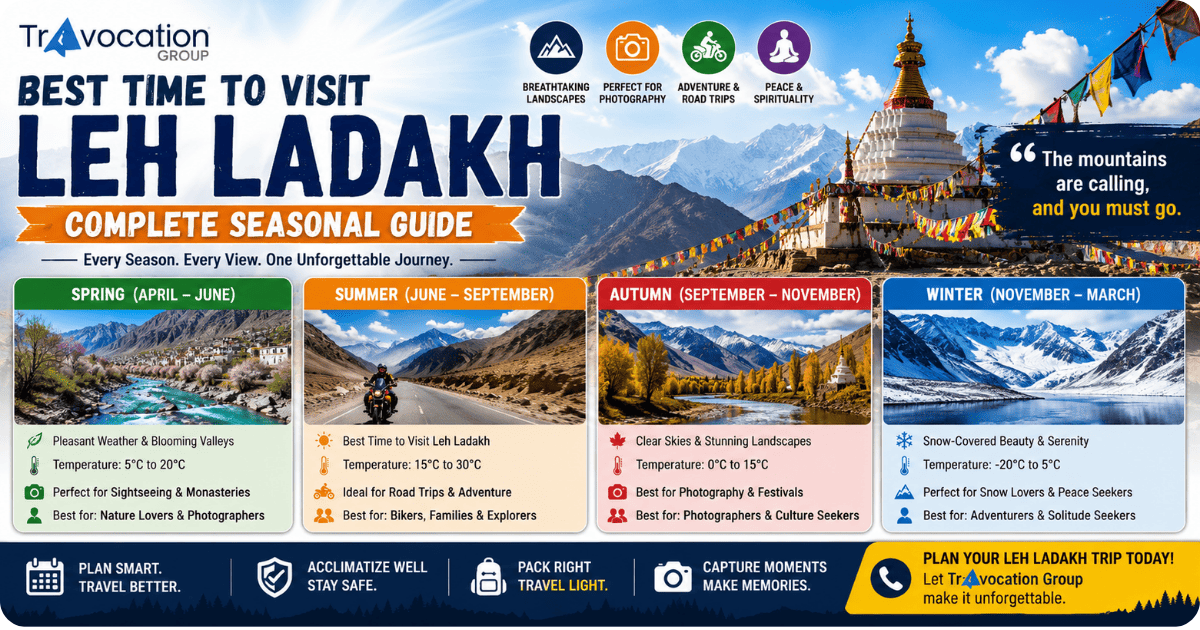
If you are wondering about the best time to visit Leh Ladakh, the ideal period for most travellers is May to September. However, the best time to visit Leh Ladakh depends on whether you want to travel by road, fly with family, see snowfall, enjoy a bike trip or experience a quieter winter landscape.
Ladakh is a high-altitude destination with dramatic mountains, ancient monasteries, blue lakes, cold deserts and challenging mountain passes. The region looks different in every season. Summer offers accessible roads and outdoor activities, autumn brings clear skies and fewer tourists, while winter creates snow-covered landscapes and frozen lakes.
For a first trip that combines sightseeing, comfortable weather and better access to major attractions, plan your visit between June and September. May and October can also be excellent, but some roads, passes and accommodation facilities may operate according to weather conditions.
Quick answer: May to September is best for general sightseeing, June to September is best for a road trip, June to August is convenient for families travelling by flight, and December to February is best for snowfall and winter experiences.
Best Time to Visit Leh Ladakh by Month
The travel season in Ladakh is not the same as in most Indian hill stations. Even during summer, nights can be cold, and high-altitude passes may receive sudden snowfall. Therefore, month-wise planning is important.
January: Best for Winter Experiences
January is one of the coldest months in Ladakh. Leh and the surrounding areas remain covered in snow, while some high-altitude lakes and rivers may freeze. This is a suitable month for travellers who specifically want a winter adventure.
Popular winter activities may include:
-
Chadar Trek, depending on ice and weather conditions.
-
Snow photography.
-
Winter landscapes around Leh.
-
A visit to selected monasteries and villages.
-
Snow leopard expeditions with specialist operators.
Road access from Srinagar and Manali is generally not suitable during this period. Travellers usually reach Leh by flight, but internal roads can still be affected by snow and ice.
January is not the easiest month for a family holiday or a first-time Ladakh trip. Medical facilities and accommodation options may be limited outside Leh, and temperatures can become extremely low. The official Ladakh travel advisory warns that winter temperatures may fall to around −30∘C-30^\circ\text{C}, so visitors need proper thermal clothing and emergency supplies.
February: Snowfall and Frozen Landscapes
February continues the winter season. It is one of the best months for seeing snow-covered valleys and experiencing the frozen appearance of Ladakh. The Chadar Trek season may continue, but its feasibility depends on the condition of the Zanskar River and official safety guidance.
Choose February if you want:
-
A quieter Ladakh experience.
-
Snow-covered mountains and villages.
-
Winter photography.
-
A chance to see frozen water bodies.
-
A specialised winter trek or wildlife experience.
Travelling during February requires flexibility. Flights can be delayed due to poor weather, and internal roads may close temporarily. Always keep spare days in your itinerary.
March: A Transitional Month
March marks the slow transition from winter to spring. Leh may still be cold, and snow can remain in the higher areas. Some tourist services begin reopening, but the complete tourist season has not yet started.
March may suit experienced travellers who want:
-
Fewer tourists.
-
A peaceful stay in Leh.
-
Winter scenery without peak-season crowds.
-
A gradual change from snow to clearer landscapes.
It is not the most reliable month for a complete road circuit. High passes may remain closed, and the road journey from Manali is generally not practical.
April: Good for Flights and Early-Season Travel
April is a suitable month for travelling to Leh by air, particularly if you want a quieter holiday. The weather becomes more pleasant during the day, although mornings and evenings remain cold.
Advantages of visiting in April include:
-
Fewer tourists than in June and July.
-
Clear views around Leh on suitable weather days.
-
A peaceful atmosphere at monasteries.
-
Possibility of seeing snow at higher passes.
-
Better availability of accommodation compared with peak summer.
April is not usually the best month for a complete road trip because the major highways may still be affected by snow clearance, landslides or restricted movement. A flight-based itinerary around Leh is more practical.
May: One of the Best Shoulder-Season Months
May is an excellent month for travellers looking for a balance between pleasant weather and fewer crowds. Srinagar–Leh road travel may become possible during the month, but the exact opening date depends on snow conditions and road clearance. The Manali–Leh route usually becomes more reliable later in the season.
May is suitable for:
-
A flight to Leh.
-
An early-season road journey through Srinagar, subject to official confirmation.
-
Sightseeing around Leh.
-
Visiting monasteries and local villages.
-
Seeing remaining snow at higher passes.
Road conditions can change quickly in May. Do not rely only on a fixed online opening date. Check the latest official road advisory before finalising your departure.
June: Best Overall Month for Road Trips
June is one of the most reliable months for a Leh Ladakh road trip. The main routes are generally more accessible after snow clearance, and most tourist facilities are operating.
The month is especially suitable for:
-
Manali–Leh road trips.
-
Srinagar–Leh road trips.
-
Motorcycle tours.
-
Jeep and car journeys.
-
Nubra Valley and Pangong Lake circuits.
-
Trekking and outdoor photography.
The landscape may still have snow around high mountain passes, while the lower valleys become easier to explore. June is also a popular month, so accommodation and transport should be arranged in advance.
July: Best for Full Connectivity and Activities
July is part of the peak travel season. Roads, passes, hotels, camps and sightseeing services are generally operating, although weather-related interruptions are still possible.
You can plan:
-
A complete road circuit.
-
Motorcycle or car travel.
-
Camping in selected areas.
-
Monastery visits.
-
Photography around Pangong Tso and Nubra Valley.
-
Trekking and rafting where conditions permit.
Ladakh lies partly in the rain-shadow region, but routes approaching the region can still experience rain, landslides or temporary roadblocks. A road trip should include buffer time rather than a tightly packed schedule.
August: Good but Busy
August offers open routes and functioning tourism infrastructure, but it is usually one of the busiest months. Travellers may encounter crowds at popular viewpoints and lakes.
August can work well for:
-
Families travelling by flight.
-
First-time visitors who want maximum access.
-
Group tours.
-
Outdoor activities.
-
Cultural sightseeing.
-
High-altitude road journeys with flexible planning.
If you prefer quiet roads and a more relaxed experience, September may be better. During the monsoon period, weather conditions on connecting routes must be monitored carefully.
September: Best for Clear Skies and Fewer Crowds
September is widely considered one of the best months for Ladakh. The peak crowds begin to reduce, skies are often clear, and the landscape may have golden autumn shades.
September is ideal for:
-
Photography.
-
Road trips.
-
Motorcycle journeys.
-
Family sightseeing.
-
Trekking.
-
Visiting Pangong Lake, Nubra Valley and monasteries.
-
Travellers who prefer a quieter atmosphere.
Road access can still depend on snowfall and local conditions, particularly towards the end of the month. If you want to travel by road, plan earlier in September for a wider safety margin.
October: Beautiful but Weather-Dependent
October is a shoulder-season month. Early October can offer clear skies, autumn colours and fewer visitors. However, temperatures drop quickly, particularly at night and near high-altitude lakes.
October may be suitable for:
-
A short flight-based holiday.
-
Photography.
-
Monastery visits.
-
A quieter road trip early in the month.
-
Travellers comfortable with cold weather.
The Manali–Leh route may become unreliable or close as winter approaches. Do not assume that every pass or tourist camp will remain open throughout October.
November: Beginning of the Harsh Winter
November is generally an off-season month. Snow and freezing temperatures begin to affect roads and services. Many seasonal hotels, restaurants and camps may close.
Visit in November only if you are prepared for:
-
Very cold conditions.
-
Limited accommodation outside Leh.
-
Possible flight disruptions.
-
Sudden road closures.
-
Fewer medical and transport facilities in remote locations.
For most leisure travellers, November is not the most convenient time.
December: Best for Snow-Seeking Travellers
December is suitable for travellers who specifically want winter scenery and snowfall. Snow may cover the mountains and villages, while some lakes and waterways begin to freeze.
The best way to reach Leh during this period is generally by flight, subject to weather and airline operations. Winter travel should be planned with experienced local support, appropriate clothing and emergency flexibility.
Seasonal Travel Guide
Best Time to Visit Leh Ladakh by Road
The best time to visit Leh Ladakh by road is usually June to September. This period offers the most practical combination of accessible highways, functioning accommodation, open passes and sightseeing opportunities.
There are two major road approaches:
-
Srinagar–Leh Highway: This route usually becomes accessible earlier in the season, but opening dates can change due to snow at Zoji La and other sections.
-
Manali–Leh Highway: This route generally opens later because it crosses several high passes and receives heavy winter snow.
Best months by road
A road journey is not only about reaching Leh. It is also about crossing high passes, travelling through remote stretches and responding to sudden weather changes. The route may be temporarily restricted even during the recommended season.
Road-trip planning tips
-
Check highway status shortly before departure.
-
Add at least one or two buffer days.
-
Avoid driving at night in remote mountain areas.
-
Carry warm layers even during summer.
-
Keep offline maps and essential documents.
-
Carry basic medicines, water and snacks.
-
Use a reliable vehicle with suitable ground clearance.
-
Do not rush through high-altitude passes.
-
Follow local traffic, weather and security instructions.
-
Confirm accommodation before travelling to remote valleys.
Best Time to Visit Leh Ladakh with Family
The best time to visit Leh Ladakh with family is generally June to September, with June and September often offering the best balance. During this period, families have better access to roads, hotels, restaurants, transport and sightseeing locations.
Travelling with children or older adults requires more preparation because Leh is located at a high altitude. The official travel advisory recommends allowing at least 48 hours for acclimatisation in Leh before proceeding to higher areas such as Nubra Valley or Pangong Lake.
Family travel by month
Family-friendly planning advice
-
Spend the first two days in Leh.
-
Keep the first day light, with rest and gentle local sightseeing.
-
Avoid taking children directly to Pangong Lake after landing.
-
Carry warm clothing, sunscreen, sunglasses and lip balm.
-
Keep snacks and drinking water available.
-
Choose accommodation with heating and reliable sanitation.
-
Ask a doctor about travelling with infants, older adults or people with respiratory conditions.
-
Avoid alcohol and strenuous activity during initial acclimatisation.
-
Keep the itinerary flexible.
-
Descend and seek medical help if serious altitude symptoms appear.
Headache, nausea, unusual tiredness and breathlessness should not be ignored. Remote areas have limited medical infrastructure, so travellers should carry prescribed medicines and a first-aid kit.
Best Time to Visit Ladakh by Flight
The best time to visit Ladakh by flight is April to October for general sightseeing. Flights are also the practical access option during winter, but travellers should be prepared for severe cold and weather-related delays.
Flying is suitable for:
-
Families.
-
Older travellers.
-
Short holidays.
-
Visitors who do not want a long road journey.
-
Travellers planning a winter trip.
-
People interested in Leh, monasteries and nearby valleys.
A flight takes you quickly from a low-altitude city to Leh, so acclimatisation becomes particularly important. Do not schedule a demanding excursion immediately after arrival.
Suggested flight-based itinerary
-
Day 1: Arrival in Leh, rest and hydration.
-
Day 2: Gentle local sightseeing around Leh.
-
Day 3: Visit nearby monasteries or villages.
-
Day 4: Travel to Nubra Valley if acclimatised.
-
Day 5: Explore Nubra Valley.
-
Day 6: Continue to Pangong Lake if conditions permit.
-
Day 7: Return to Leh or keep as a buffer day.
This itinerary should be adjusted according to health, road conditions and local advice. A shorter trip should not remove the acclimatisation period.
Best Time to Visit Leh Ladakh for Snowfall
The best time to visit Leh Ladakh for snowfall is usually December to February. January and February are generally the strongest choices for travellers seeking a fully winter appearance, although actual snowfall varies by location and year.
There is an important difference between:
-
Seeing old snow: Possible in May or June around high passes.
-
Experiencing active winter snowfall: More likely from December to February.
-
Finding frozen lakes: More likely during the coldest winter period.
-
Travelling through snow-covered roads: Unpredictable and potentially dangerous.
Winter roads from Srinagar and Manali are generally closed or unsuitable during heavy snowfall. Travellers normally fly to Leh, but flights can be delayed. Internal travel to Nubra, Pangong, Zanskar or remote villages may also be restricted.
Snowfall planning table
Do not visit only because an online article promises heavy snowfall. Snowfall is weather-dependent, and some winters may bring less snow than expected. Check official weather updates before travelling.
You May Also Read – Vrindavan to Barsana Distance: Complete Road, Bus & Car Travel Guide
Best Places to Visit by Season
Road conditions, permits, local restrictions and weather can affect access to every destination. Confirm the latest information before leaving Leh.
What to Pack for Leh Ladakh
Packing correctly is essential regardless of the month. Sunlight can feel strong during the day, while temperatures fall rapidly after sunset.
Essential clothing
-
Thermal inner layers.
-
Fleece or woollen mid-layers.
-
A windproof and waterproof outer jacket.
-
Warm socks and gloves.
-
A woollen cap or balaclava.
-
Comfortable walking shoes.
-
Extra layers for children and older adults.
Health and travel essentials
-
Sunscreen with high SPF.
-
UV-protection sunglasses.
-
Lip balm and moisturiser.
-
Reusable water bottle.
-
Personal medicines.
-
Basic first-aid supplies.
-
ORS or electrolyte sachets.
-
Copies of identification documents.
-
Power bank and offline maps.
-
Small torch or headlamp.
Drink sufficient water, eat light meals during the first day and avoid alcohol while acclimatising. The official advisory also recommends carrying emergency supplies when travelling between October and March.
Common Planning Mistakes to Avoid
-
Treating Ladakh like a normal low-altitude holiday destination.
-
Planning a high-altitude excursion on the arrival day.
-
Assuming road-opening dates are fixed every year.
-
Travelling without a buffer day.
-
Wearing inadequate clothing in summer.
-
Ignoring headaches, nausea or breathlessness.
-
Booking a winter itinerary without checking facilities.
-
Driving long mountain routes after dark.
-
Depending entirely on mobile connectivity.
-
Filling every day with multiple destinations.
A slower itinerary is safer and more enjoyable. Ladakh rewards travellers who allow time for weather, acclimatisation and unexpected road changes.
Summary
-
Best overall time: May to September.
-
Best time for road trips: June to September.
-
Best time for a Manali–Leh road trip: June to September, after official opening.
-
Best time for a Srinagar–Leh road trip: May to October, subject to road conditions.
-
Best time for families: June or September.
-
Best time to fly: April to October for comfortable sightseeing.
-
Best time for snowfall: December to February.
-
Best time for fewer crowds: May, September and early October.
-
Best time for high-altitude outdoor activities: June to September.
-
Most important safety rule: Acclimatise in Leh before travelling to higher areas.
Conclusion
The best time to visit Leh Ladakh depends on the kind of experience you want. For a comfortable first visit with sightseeing and reliable access, choose June to September. For a quieter trip with clear skies and fewer tourists, September is an excellent option for Travocation.
If your priority is a road journey, plan around the opening of the Srinagar–Leh or Manali–Leh highway rather than relying on a fixed calendar date. If you are travelling with family, fly to Leh, spend at least 48 hours acclimatising and keep the itinerary relaxed. For snowfall, frozen landscapes and winter photography, December to February offers the most suitable conditions, but it requires serious preparation.
Always check current weather, road and travel advisories before departure because Ladakh’s mountain conditions can change quickly.
Frequently Asked Questions
1. What is the best time to visit Leh Ladakh?
The best time to visit Leh Ladakh for most travellers is from May to September. June to September is particularly suitable for road trips, sightseeing and outdoor activities, while May and October are better for quieter, weather-dependent travel.
2. What is the best time to visit Leh Ladakh by road?
June to September is usually the best time to visit Leh Ladakh by road. The Manali–Leh route generally becomes accessible later than the Srinagar–Leh route, and both routes remain dependent on snow clearance and local conditions.
3. What is the best time to visit Leh Ladakh with family?
June and September are excellent months for a family trip. July and August also offer good access and facilities, but they can be busier and may experience occasional weather-related disruptions.
4. What is the best time to visit Ladakh by flight?
April to October is the most comfortable period for a flight-based Ladakh holiday. Flights are also used in winter, but December to February requires preparation for severe cold, limited services and possible delays.
5. What is the best time to visit Leh Ladakh for snowfall?
December to February is generally the best time to visit Leh Ladakh for snowfall. January and February are often preferred for snow-covered landscapes, frozen water bodies and winter activities, subject to weather conditions.
6. Can I visit Leh Ladakh in winter?
Yes, but winter travel is suitable mainly for experienced or well-prepared travellers. You should fly to Leh, carry proper cold-weather gear, allow extra time for delays and confirm the availability of accommodation and local transport.
7. Is May good for a Leh Ladakh trip?
May can be very good for a flight-based holiday and some early-season road journeys. However, high passes and highways may not be fully reliable, so check official road updates before choosing a road itinerary.
8. Is September better than July for Ladakh?
September is often better for travellers who prefer clear skies, fewer crowds and photography. July offers broader access and more active facilities, but it is usually busier.
9. How many days should I stay in Leh before visiting Pangong Lake?
Allow at least 48 hours in Leh for acclimatisation before travelling to higher-altitude destinations. Your exact itinerary should also consider health, road conditions and advice from local authorities.
10. Is Ladakh safe for children and senior citizens?
Ladakh can be suitable for families, but altitude requires careful planning. Consult a doctor before travel, choose a gradual itinerary, avoid immediate high-altitude excursions and seek help if severe symptoms develop.