
 English
 Spanish
6 Days Golden Triangle Tour From Delhi — Private Delhi Agra Jaipur Package
The Golden Triangle tour from Delhi is India's most celebrated travel route, connecting three of the country's most iconic cities — Delhi, Agra, and Jaipur — into one seamless 6-day journey. Covering over 700 kilometres across the heartland of North India, this Delhi Agra Jaipur tour takes you through Mughal grandeur, Rajput splendour, and the living pulse of a civilisation that spans more than 5,000 years.
Whether you are a first-time visitor to India or a seasoned traveller seeking a deeper cultural experience, the India Golden Triangle package offers the perfect balance of heritage monuments, authentic cuisine, vibrant bazaars, and personalised comfort. Our private Golden Triangle tour from Delhi is designed for travellers who want to explore at their own pace — no rushed group schedules, just thoughtfully crafted days with expert local guides.
What is the Golden Triangle Tour India?
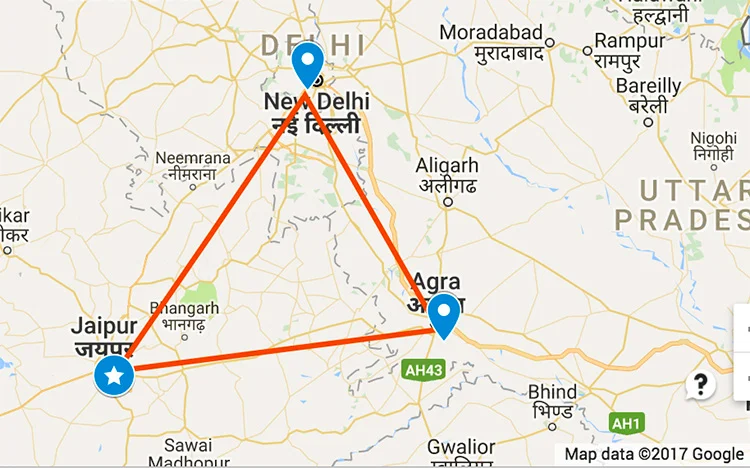
The Golden Triangle India is a triangular tourist circuit in North India that links New Delhi (the capital), Agra (home of the Taj Mahal), and Jaipur (the Pink City of Rajasthan). The three cities form an approximate triangle on the map, each roughly 200–230 km apart, making it an ideal itinerary for a 5 to 7-day North India heritage tour.
Each destination on this Delhi Jaipur Agra trip is a UNESCO World Heritage Site hub and an entry point into India's layered history — from the Mughal Empire (1526–1857) to the Rajput kingdoms of Rajasthan. Together, they offer a comprehensive introduction to India that no other circuit can match.
Key facts about the Golden Triangle India itinerary:
- Delhi to Agra: approximately 233 km (3–4 hours by road)
- Agra to Jaipur: approximately 240 km (4–5 hours via Fatehpur Sikri)
- Jaipur to Delhi: approximately 270 km (4–5 hours, return)
- UNESCO World Heritage Sites on route: Taj Mahal, Agra Fort, Fatehpur Sikri, Qutub Minar, Humayun's Tomb, Jantar Mantar (Jaipur)
Explore More Tour
6-Day Golden Triangle Itinerary — Day-by-Day Overview
6 - Day Golden Triangle Tour from Delhi Itinerary at a Glance
| Day | Route | Key Attractions | Overnight |
|---|---|---|---|
| Day 1 | Arrive Delhi | Red Fort, Jama Masjid, Chandni Chowk | Delhi |
| Day 2 | Delhi Sightseeing | India Gate, Rashtrapati Bhawan, Humayun's Tomb, Qutub Minar | Delhi |
| Day 3 | Delhi → Agra | Taj Mahal (sunrise), Agra Fort, Mehtab Bagh sunset | Agra |
| Day 4 | Agra → Fatehpur Sikri → Jaipur | Fatehpur Sikri, en-route drive to Pink City | Jaipur |
| Day 5 | Jaipur Sightseeing | Amber Fort, City Palace, Jantar Mantar, Hawa Mahal | Jaipur |
| Day 6 | Jaipur → Delhi Departure | Local markets, transfer to Delhi airport/hotel | — |
was $50.00
save upto 20 %
Get Quotation


 Book on Tripadvisor
 Book on GetYourGuide
About This Tour

Free cancellation
Cancel up to 24 hours in advance for a full refund

Reserve now & pay on arrival
Keep your travel plans flexible — book your spot and pay nothing today.

Duration 06 Days
Check availability to see starting times.

Skip the line through a separate entrance

Live tour guide
English, Spanish, Japanese, French, Russian, German, & More

Pickup included
Pick up from Delhi airport, your hotel in Delhi Or Gurgaon

Private Tour
Highlights
- Covers Delhi, Agra & Jaipur — India's most iconic Golden Triangle circuit — in one seamless 6-day private trip
- Private AC vehicle with dedicated driver + expert English-speaking guide throughout
- Sunrise visit to the Taj Mahal plus Agra Fort, Fatehpur Sikri, Amber Fort, City Palace, Hawa Mahal and more
- Starts from just $40 per person, with hotel/airport pickup and drop-off included
- Flexible booking — pay-on-arrival option, PayPal/card/cash accepted, free cancellation up to 24 hours before
- Ideal for first-time India visitors, families, couples, and solo travelers wanting a hassle-free, guided intro to North India
What’s Included
- AC Private SUV/Sedan Car for Transfer & sightseeing.
- Pickup and drop back to hotel / airport in New Delhi.
- Tip to Tour Guide & Chauffeur
- Lunch and Dinner at restaurant or at hotel
Detailed Itinerary
Expand allCollapse allArrival in Delhi: Gateway to the Golden Triangle
Your Golden Triangle tour from Delhi begins the moment you land at Indira Gandhi International Airport, where your private driver will be waiting with a name board. After a comfortable transfer to your hotel, the afternoon opens up for your first taste of Old Delhi — one of Asia's most atmospheric urban experiences.
Red Fort (Lal Qila) — A UNESCO World Heritage Site
Constructed in 1638 by Mughal Emperor Shah Jahan, the Red Fort (Lal Qila) is the defining landmark of Old Delhi. Built from red Agra sandstone, its massive octagonal towers and ornate Diwan-i-Aam (Hall of Public Audience) offer a vivid window into Mughal administrative grandeur. The Archaeological Survey of India (asi.nic.in) maintains this monument as one of India's most significant protected sites. Every year on Independence Day, the Prime Minister addresses the nation from its ramparts.
Jama Masjid — India's Largest Mosque
A five-minute walk from the Red Fort, Jama Masjid is the largest mosque in India, commissioned by Shah Jahan between 1644 and 1656. Its three massive domes and soaring minarets can be climbed for a panoramic view of Old Delhi's rooftops — a perspective no guidebook can truly prepare you for.
Chandni Chowk — The Sensory Heart of Delhi
After Jama Masjid, plunge into Chandni Chowk, one of Asia's oldest and busiest markets. Dating to the 17th century, this labyrinthine bazaar is a paradise for foodies and shoppers alike. Try Delhi's famous chole bhature, daulat ki chaat, and jalebis from century-old establishments. The evening light filtering through its crowded lanes is an image you will carry long after your India Golden Triangle holiday ends.
Exploring New Delhi: Colonial Grandeur & Mughal Echoes
The second day of your Delhi Agra Jaipur tour turns to New Delhi — the imperial capital designed by British architect Edwin Lutyens in the early 20th century, now home to India's most powerful institutions and two extraordinary Mughal-era monuments.
India Gate — The Heart of Ceremonial Delhi
India Gate is a 42-metre war memorial designed by Lutyens, commemorating over 70,000 Indian soldiers who died in World War I and the Third Anglo-Afghan War. The eternal flame of Amar Jawan Jyoti burns beneath its arch. Surrounded by manicured lawns and wide tree-lined boulevards, India Gate is equally impressive by day and magnificently illuminated at night.
Rashtrapati Bhavan — India's Presidential Palace
The official residence of the President of India, Rashtrapati Bhavan is a 340-room architectural masterpiece that blends classical European, Mughal, and Rajput styles. Its Mughal Gardens (open to the public seasonally) are among the finest formal gardens in Asia.
Humayun's Tomb — The Prototype of the Taj Mahal
Humayun's Tomb, commissioned in 1565 by Empress Bega Begum in memory of the Mughal Emperor Humayun, is a UNESCO World Heritage Site and widely regarded as the architectural forerunner of the Taj Mahal. Its double-domed structure in red sandstone and white marble, set within Persian-style charbagh gardens, is an essential stop on any North India heritage tour. For detailed visitor information, the ASI's official page (asi.nic.in) provides current timings and entry fees.
Qutub Minar (Optional) — The World's Tallest Brick Minaret
If time permits, the nearby Qutub Minar complex — another UNESCO World Heritage Site built in 1193 by Qutb ud-Din Aibak — rounds off Day 2 with one more layer of Delhi's thousand-year architectural story.
You May Also Like these: Delhi City Tour Packages →
Delhi to Agra: The City of Eternal Love
The journey from Delhi to Agra on your 6-day Golden Triangle holiday takes approximately 3.5 hours on the Yamuna Expressway. Departing early means arriving in time for the most magical moment of the entire circuit — sunrise at the Taj Mahal.
Taj Mahal — One of the Seven Wonders of the World
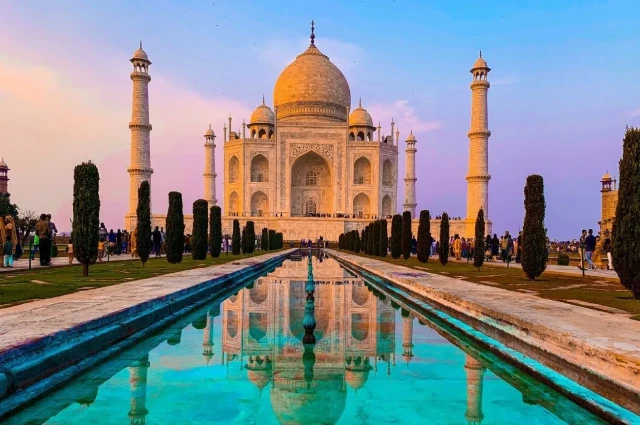
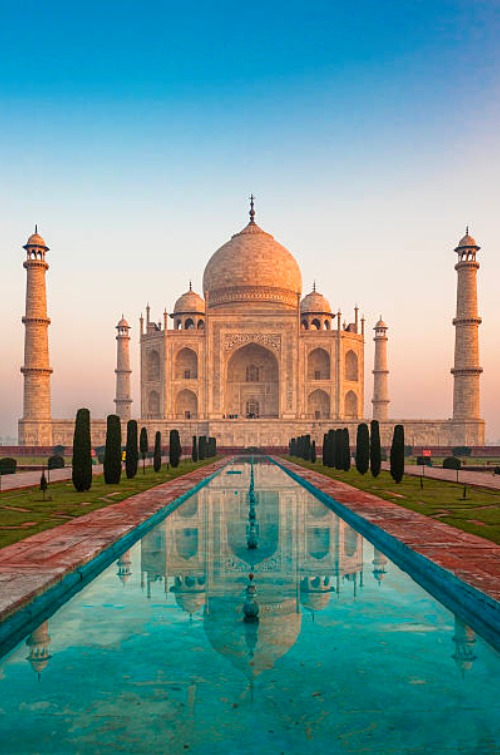
Standing on the southern bank of the Yamuna River, the Taj Mahal is the undisputed centrepiece of every India Golden Triangle package. Built by Mughal Emperor Shah Jahan between 1631 and 1648 as a mausoleum for his beloved wife Mumtaz Mahal, the Taj took 22 years and 20,000 artisans to complete. Its symmetry is mathematically perfect; its white Makrana marble changes colour with the light — pale gold at dawn, brilliant white at noon, soft pink and amber at sunset. UNESCO has designated the Taj Mahal a World Heritage Site since 1983 (whc.unesco.org).
Traveller's tip: The Taj Mahal is closed every Friday. All Travocation itineraries are built around this — your Agra day will always fall on a non-Friday.
Agra Fort — Where the Mughal Empire Was Governed
Just 2.5 km from the Taj Mahal, Agra Fort is a UNESCO-listed red sandstone citadel begun by Emperor Akbar in 1565 and expanded by Jahangir and Shah Jahan. Within its walls are the Diwan-i-Am, the Diwan-i-Khas, and the hauntingly beautiful Musamman Burj tower — where the imprisoned Shah Jahan spent his final years gazing at the Taj Mahal. It is one of the most emotionally resonant monuments on the entire Golden Triangle India itinerary.
Mehtab Bagh — Sunset with the Taj Mahal
End your Agra day at Mehtab Bagh (Moonlight Garden), a Mughal-era garden directly across the Yamuna from the Taj Mahal. Arriving in the late afternoon positions you for a sunset view of the Taj that few travellers plan for — and none forget.
You May Also Like these: Taj Mahal Sunrise Tour by Private Car
Agra to Jaipur via Fatehpur Sikri
The 240-km drive from Agra to Jaipur is one of the most scenic legs of the Delhi Jaipur Agra trip, and the route passes through a ghost city that ranks among Mughal India's most haunting treasures.
Fatehpur Sikri — The Abandoned Mughal Capital
Constructed by Emperor Akbar between 1571 and 1585 as the new Mughal capital, Fatehpur Sikri was abandoned after just 14 years — allegedly due to a water shortage — leaving an almost perfectly preserved city in red sandstone. The Buland Darwaza (Gate of Magnificence) at 54 metres is the tallest gateway in Asia. Another UNESCO World Heritage Site, Fatehpur Sikri is approximately 40 km from Agra and is always included in our private Golden Triangle tour itinerary as an en-route stop.
You May Also Like these: Golden Triangle Tour Packages →
Arriving in Jaipur by late afternoon, check in to your hotel, freshen up, and spend the first evening exploring the atmospheric Johri Bazaar — Jaipur's premier jewellery and gem market.
Jaipur: The Pink City of Rajasthan
Jaipur, founded by Maharaja Sawai Jai Singh II in 1727, is the crown jewel of Rajasthan and the third vertex of the India Golden Triangle. Its rose-terracotta buildings, painted uniformly pink in 1876 to welcome the Prince of Wales, earned it the enduring nickname "the Pink City." Day 5 is the fullest sightseeing day of the entire North India tour package.
Amber Fort — Jaipur's Hilltop Masterpiece
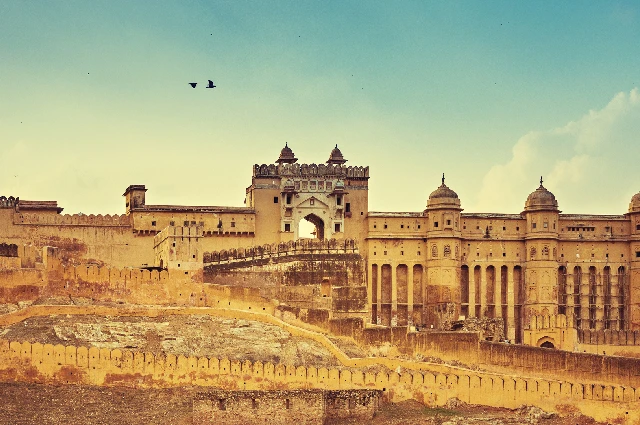
Perched on a rocky ridge 11 km from Jaipur city, Amber Fort (also spelled Amer Fort) is a supreme example of Rajput military architecture blended with Mughal decorative arts. Built from pale yellow sandstone and white marble by Raja Man Singh in 1592, its Sheesh Mahal (Mirror Palace) — every surface encrusted with tiny convex mirrors — creates a breathtaking play of light with a single candle.
The traditional elephant ride to the fort entrance is available seasonally; jeep rides operate year-round for those who prefer an alternative.
City Palace — The Living Heart of Jaipur Royalty
In the old walled city, the City Palace complex remains the official residence of the Jaipur royal family (the Maharaja of Jaipur). The palace museum houses one of India's finest collections of royal costumes, weaponry, and painted manuscripts. Its Mubarak Mahal (Welcome Palace) and Chandra Mahal (Moon Palace) are architectural masterclasses in Rajput-Mughal fusion.
Jantar Mantar — The Largest Stone Observatory in the World
Built by Maharaja Jai Singh II in 1734, Jantar Mantar is a UNESCO World Heritage Site and one of five astronomical observatories the Maharaja constructed across India. Its 19 architectural astronomical instruments — including the world's largest stone sundial — were used to compile the Zij Muhammad Shahi, an astronomical catalogue still referenced by scholars. For history-of-science enthusiasts on a Golden Triangle India itinerary, Jantar Mantar is unmissable.
Hawa Mahal — The Palace of Winds
The iconic Hawa Mahal (Palace of Winds, 1799) is Jaipur's most photographed facade — a five-storey honeycomb of 953 latticed sandstone windows designed so royal ladies of the court could observe street life without being seen. It is best photographed from outside (eastern facade) in the morning light. Visiting the interior gives you views over the old city bazaars below.
Jaipur's Local Markets
The afternoon of Day 5 is ideal for exploring Jaipur's celebrated craft markets: Johari Bazaar for gems and gold jewellery, Bapu Bazaar for traditional bandhej textiles and mojari shoes, and Tripolia Bazaar for lac bangles and brassware.
You May Also Like these: Jaipur Full Day City Tour →
Return to Delhi: Farewell to the Golden Triangle
Your final morning in Jaipur is free for last-minute shopping or a relaxed breakfast before your driver arrives for the 4–5 hour return drive to Delhi. Drop-off can be at Indira Gandhi International Airport, any hotel in Delhi, Noida, or Gurgaon.
What's Included & Excluded in Our Golden Triangle Tour Package
Table 2: Inclusions & Exclusions
| ✅ Included | ❌ Not Included |
|---|---|
| Private AC SUV / Sedan for all transfers | International and domestic airfare |
| Airport pickup and drop-off in Delhi | Monument entry tickets (paid on-site) |
| All intercity road transfers | Personal travel insurance |
| Expert English-speaking local guides | Tips for guides and driver (discretionary) |
| Hotel accommodation (as per package) | Meals unless specified in itinerary |
| Toll taxes, parking fees, driver allowances | Camera/video fees at monuments |
| 24/7 customer support | Optional activities (elephant ride, cultural show) |
| Bottled water during transfers | Any expenses of personal nature |
Best Time for a Golden Triangle Tour From Delhi
The Golden Triangle India route is accessible year-round, but each season offers a different experience. Here is a seasonal guide to help you plan your North India heritage tour:
Seasonal Guide to the Golden Triangle
| Season | Months | Temperature | Experience | Rating |
|---|---|---|---|---|
| Peak Season (Best) | October – March | 10°C – 28°C | Ideal weather, clear skies for Taj Mahal photography, major festivals (Diwali, Holi) | ⭐⭐⭐⭐⭐ |
| Shoulder Season | September & April | 22°C – 38°C | Fewer crowds, manageable heat in mornings and evenings | ⭐⭐⭐⭐ |
| Monsoon Season | July – August | 28°C – 36°C | Lush greenery, lower prices, occasional disruptions due to rain | ⭐⭐⭐ |
| Hot Season (Avoid) | May – June | 38°C – 46°C | Extremely hot, especially in Agra and Jaipur; not recommended | ⭐⭐ |
Why Choose Travocation for Your Golden Triangle Tour From Delhi?
When booking a Delhi Agra Jaipur tour, the quality of your operator defines the quality of your experience. Here is what sets our Golden Triangle tour packages apart:
1. Truly Private Tours Every Travocation Golden Triangle India package is 100% private — you travel only with your own group, never with strangers in a shared bus.
2. Expert Local Guides Our guides are licensed by the Ministry of Tourism, Government of India, with deep knowledge of Mughal history, Rajput culture, and the specific architectural heritage of each monument on the North India tour package.
3. Flexible Itineraries We can customise any 6-day Golden Triangle holiday — add wildlife at Ranthambore, extend to Udaipur or Varanasi, or slow down for a deeper stay in a single city.
4. Transparent Pricing Starting from $40 USD per person, with no hidden costs. Monument entry fees are clearly itemised so you are never surprised.
5. 24/7 In-Trip Support Our local team is reachable around the clock throughout your India Golden Triangle tour — whether you need a restaurant recommendation in Jaipur or urgent travel assistance.
6. Multilingual Service Guides available in English, Spanish, French, German, Japanese, and Russian — ideal for international travellers on a Delhi Jaipur Agra trip.
Explore our full range of Golden Triangle Tour Packages → or browse by 6–10 Day Tours →
Summary
The Golden Triangle tour from Delhi is the most complete introduction to India available in six days. Beginning in Delhi's Old and New City, the journey moves south to Agra for the Taj Mahal, Agra Fort, and Mehtab Bagh, before swinging west to Jaipur's Amber Fort, City Palace, Hawa Mahal, and Jantar Mantar. Travocation's private Delhi Agra Jaipur tour packages cover airport transfers, expert local guides, comfortable AC transport, and hotel accommodation — making this one of the most hassle-free ways to experience North India's greatest heritage corridor. The ideal travel window is October to March, when temperatures across all three cities are pleasant and skies are clear for photography. Whether you are a solo traveller, couple, family, or corporate group, the India Golden Triangle package is customisable to your pace, budget, and interests.
Conclusion
Few travel experiences in the world match the depth, beauty, and sheer historical weight of the Golden Triangle India itinerary. In six days, you stand before the Taj Mahal at sunrise, walk through the Red Fort's Mughal courts, watch camels pass below Hawa Mahal's latticed windows, and dine on dal baati churma in Jaipur's pink-walled streets. This is not sightseeing — it is a conversation with a civilisation.
At Travocation, our Golden Triangle tours from Delhi are built on 15 years of ground expertise, genuine local relationships, and a single promise: to show you the real India, not just the postcard version. If you are ready to explore the most iconic 700-kilometre triangle on the subcontinent, book your Golden Triangle tour today → or contact our team for a custom itinerary.
Also explore: Same Day Agra Tours → | Wildlife Tours from Delhi → | Private Tours India →

We are Here To Serve You ?
Book With Confidence
- No-hassle best price guarantee
- Customer care available 24/7
- Hand-picked Tours & Activities
- Free Travel Insurance


Detailed Itinerary
Expand allCollapse allArrival in Delhi: Gateway to the Golden Triangle
Your Golden Triangle tour from Delhi begins the moment you land at Indira Gandhi International Airport, where your private driver will be waiting with a name board. After a comfortable transfer to your hotel, the afternoon opens up for your first taste of Old Delhi — one of Asia's most atmospheric urban experiences.
Red Fort (Lal Qila) — A UNESCO World Heritage Site
Constructed in 1638 by Mughal Emperor Shah Jahan, the Red Fort (Lal Qila) is the defining landmark of Old Delhi. Built from red Agra sandstone, its massive octagonal towers and ornate Diwan-i-Aam (Hall of Public Audience) offer a vivid window into Mughal administrative grandeur. The Archaeological Survey of India (asi.nic.in) maintains this monument as one of India's most significant protected sites. Every year on Independence Day, the Prime Minister addresses the nation from its ramparts.
Jama Masjid — India's Largest Mosque
A five-minute walk from the Red Fort, Jama Masjid is the largest mosque in India, commissioned by Shah Jahan between 1644 and 1656. Its three massive domes and soaring minarets can be climbed for a panoramic view of Old Delhi's rooftops — a perspective no guidebook can truly prepare you for.
Chandni Chowk — The Sensory Heart of Delhi
After Jama Masjid, plunge into Chandni Chowk, one of Asia's oldest and busiest markets. Dating to the 17th century, this labyrinthine bazaar is a paradise for foodies and shoppers alike. Try Delhi's famous chole bhature, daulat ki chaat, and jalebis from century-old establishments. The evening light filtering through its crowded lanes is an image you will carry long after your India Golden Triangle holiday ends.
Exploring New Delhi: Colonial Grandeur & Mughal Echoes
The second day of your Delhi Agra Jaipur tour turns to New Delhi — the imperial capital designed by British architect Edwin Lutyens in the early 20th century, now home to India's most powerful institutions and two extraordinary Mughal-era monuments.
India Gate — The Heart of Ceremonial Delhi
India Gate is a 42-metre war memorial designed by Lutyens, commemorating over 70,000 Indian soldiers who died in World War I and the Third Anglo-Afghan War. The eternal flame of Amar Jawan Jyoti burns beneath its arch. Surrounded by manicured lawns and wide tree-lined boulevards, India Gate is equally impressive by day and magnificently illuminated at night.
Rashtrapati Bhavan — India's Presidential Palace
The official residence of the President of India, Rashtrapati Bhavan is a 340-room architectural masterpiece that blends classical European, Mughal, and Rajput styles. Its Mughal Gardens (open to the public seasonally) are among the finest formal gardens in Asia.
Humayun's Tomb — The Prototype of the Taj Mahal
Humayun's Tomb, commissioned in 1565 by Empress Bega Begum in memory of the Mughal Emperor Humayun, is a UNESCO World Heritage Site and widely regarded as the architectural forerunner of the Taj Mahal. Its double-domed structure in red sandstone and white marble, set within Persian-style charbagh gardens, is an essential stop on any North India heritage tour. For detailed visitor information, the ASI's official page (asi.nic.in) provides current timings and entry fees.
Qutub Minar (Optional) — The World's Tallest Brick Minaret
If time permits, the nearby Qutub Minar complex — another UNESCO World Heritage Site built in 1193 by Qutb ud-Din Aibak — rounds off Day 2 with one more layer of Delhi's thousand-year architectural story.
You May Also Like these: Delhi City Tour Packages →
Delhi to Agra: The City of Eternal Love
The journey from Delhi to Agra on your 6-day Golden Triangle holiday takes approximately 3.5 hours on the Yamuna Expressway. Departing early means arriving in time for the most magical moment of the entire circuit — sunrise at the Taj Mahal.
Taj Mahal — One of the Seven Wonders of the World
Standing on the southern bank of the Yamuna River, the Taj Mahal is the undisputed centrepiece of every India Golden Triangle package. Built by Mughal Emperor Shah Jahan between 1631 and 1648 as a mausoleum for his beloved wife Mumtaz Mahal, the Taj took 22 years and 20,000 artisans to complete. Its symmetry is mathematically perfect; its white Makrana marble changes colour with the light — pale gold at dawn, brilliant white at noon, soft pink and amber at sunset. UNESCO has designated the Taj Mahal a World Heritage Site since 1983 (whc.unesco.org).
Traveller's tip: The Taj Mahal is closed every Friday. All Travocation itineraries are built around this — your Agra day will always fall on a non-Friday.
Agra Fort — Where the Mughal Empire Was Governed
Just 2.5 km from the Taj Mahal, Agra Fort is a UNESCO-listed red sandstone citadel begun by Emperor Akbar in 1565 and expanded by Jahangir and Shah Jahan. Within its walls are the Diwan-i-Am, the Diwan-i-Khas, and the hauntingly beautiful Musamman Burj tower — where the imprisoned Shah Jahan spent his final years gazing at the Taj Mahal. It is one of the most emotionally resonant monuments on the entire Golden Triangle India itinerary.
Mehtab Bagh — Sunset with the Taj Mahal
End your Agra day at Mehtab Bagh (Moonlight Garden), a Mughal-era garden directly across the Yamuna from the Taj Mahal. Arriving in the late afternoon positions you for a sunset view of the Taj that few travellers plan for — and none forget.
You May Also Like these: Taj Mahal Sunrise Tour by Private Car
Agra to Jaipur via Fatehpur Sikri
The 240-km drive from Agra to Jaipur is one of the most scenic legs of the Delhi Jaipur Agra trip, and the route passes through a ghost city that ranks among Mughal India's most haunting treasures.
Fatehpur Sikri — The Abandoned Mughal Capital
Constructed by Emperor Akbar between 1571 and 1585 as the new Mughal capital, Fatehpur Sikri was abandoned after just 14 years — allegedly due to a water shortage — leaving an almost perfectly preserved city in red sandstone. The Buland Darwaza (Gate of Magnificence) at 54 metres is the tallest gateway in Asia. Another UNESCO World Heritage Site, Fatehpur Sikri is approximately 40 km from Agra and is always included in our private Golden Triangle tour itinerary as an en-route stop.
You May Also Like these: Golden Triangle Tour Packages →
Arriving in Jaipur by late afternoon, check in to your hotel, freshen up, and spend the first evening exploring the atmospheric Johri Bazaar — Jaipur's premier jewellery and gem market.
Jaipur: The Pink City of Rajasthan
Jaipur, founded by Maharaja Sawai Jai Singh II in 1727, is the crown jewel of Rajasthan and the third vertex of the India Golden Triangle. Its rose-terracotta buildings, painted uniformly pink in 1876 to welcome the Prince of Wales, earned it the enduring nickname "the Pink City." Day 5 is the fullest sightseeing day of the entire North India tour package.
Amber Fort — Jaipur's Hilltop Masterpiece
Perched on a rocky ridge 11 km from Jaipur city, Amber Fort (also spelled Amer Fort) is a supreme example of Rajput military architecture blended with Mughal decorative arts. Built from pale yellow sandstone and white marble by Raja Man Singh in 1592, its Sheesh Mahal (Mirror Palace) — every surface encrusted with tiny convex mirrors — creates a breathtaking play of light with a single candle.
The traditional elephant ride to the fort entrance is available seasonally; jeep rides operate year-round for those who prefer an alternative.
City Palace — The Living Heart of Jaipur Royalty
In the old walled city, the City Palace complex remains the official residence of the Jaipur royal family (the Maharaja of Jaipur). The palace museum houses one of India's finest collections of royal costumes, weaponry, and painted manuscripts. Its Mubarak Mahal (Welcome Palace) and Chandra Mahal (Moon Palace) are architectural masterclasses in Rajput-Mughal fusion.
Jantar Mantar — The Largest Stone Observatory in the World
Built by Maharaja Jai Singh II in 1734, Jantar Mantar is a UNESCO World Heritage Site and one of five astronomical observatories the Maharaja constructed across India. Its 19 architectural astronomical instruments — including the world's largest stone sundial — were used to compile the Zij Muhammad Shahi, an astronomical catalogue still referenced by scholars. For history-of-science enthusiasts on a Golden Triangle India itinerary, Jantar Mantar is unmissable.
Hawa Mahal — The Palace of Winds
The iconic Hawa Mahal (Palace of Winds, 1799) is Jaipur's most photographed facade — a five-storey honeycomb of 953 latticed sandstone windows designed so royal ladies of the court could observe street life without being seen. It is best photographed from outside (eastern facade) in the morning light. Visiting the interior gives you views over the old city bazaars below.
Jaipur's Local Markets
The afternoon of Day 5 is ideal for exploring Jaipur's celebrated craft markets: Johari Bazaar for gems and gold jewellery, Bapu Bazaar for traditional bandhej textiles and mojari shoes, and Tripolia Bazaar for lac bangles and brassware.
You May Also Like these: Jaipur Full Day City Tour →
Return to Delhi: Farewell to the Golden Triangle
Your final morning in Jaipur is free for last-minute shopping or a relaxed breakfast before your driver arrives for the 4–5 hour return drive to Delhi. Drop-off can be at Indira Gandhi International Airport, any hotel in Delhi, Noida, or Gurgaon.
What's Included & Excluded in Our Golden Triangle Tour Package
Table 2: Inclusions & Exclusions
| ✅ Included | ❌ Not Included |
|---|---|
| Private AC SUV / Sedan for all transfers | International and domestic airfare |
| Airport pickup and drop-off in Delhi | Monument entry tickets (paid on-site) |
| All intercity road transfers | Personal travel insurance |
| Expert English-speaking local guides | Tips for guides and driver (discretionary) |
| Hotel accommodation (as per package) | Meals unless specified in itinerary |
| Toll taxes, parking fees, driver allowances | Camera/video fees at monuments |
| 24/7 customer support | Optional activities (elephant ride, cultural show) |
| Bottled water during transfers | Any expenses of personal nature |
Best Time for a Golden Triangle Tour From Delhi
The Golden Triangle India route is accessible year-round, but each season offers a different experience. Here is a seasonal guide to help you plan your North India heritage tour:
Seasonal Guide to the Golden Triangle
| Season | Months | Temperature | Experience | Rating |
|---|---|---|---|---|
| Peak Season (Best) | October – March | 10°C – 28°C | Ideal weather, clear skies for Taj Mahal photography, major festivals (Diwali, Holi) | ⭐⭐⭐⭐⭐ |
| Shoulder Season | September & April | 22°C – 38°C | Fewer crowds, manageable heat in mornings and evenings | ⭐⭐⭐⭐ |
| Monsoon Season | July – August | 28°C – 36°C | Lush greenery, lower prices, occasional disruptions due to rain | ⭐⭐⭐ |
| Hot Season (Avoid) | May – June | 38°C – 46°C | Extremely hot, especially in Agra and Jaipur; not recommended | ⭐⭐ |
Why Choose Travocation for Your Golden Triangle Tour From Delhi?
When booking a Delhi Agra Jaipur tour, the quality of your operator defines the quality of your experience. Here is what sets our Golden Triangle tour packages apart:
1. Truly Private Tours Every Travocation Golden Triangle India package is 100% private — you travel only with your own group, never with strangers in a shared bus.
2. Expert Local Guides Our guides are licensed by the Ministry of Tourism, Government of India, with deep knowledge of Mughal history, Rajput culture, and the specific architectural heritage of each monument on the North India tour package.
3. Flexible Itineraries We can customise any 6-day Golden Triangle holiday — add wildlife at Ranthambore, extend to Udaipur or Varanasi, or slow down for a deeper stay in a single city.
4. Transparent Pricing Starting from $40 USD per person, with no hidden costs. Monument entry fees are clearly itemised so you are never surprised.
5. 24/7 In-Trip Support Our local team is reachable around the clock throughout your India Golden Triangle tour — whether you need a restaurant recommendation in Jaipur or urgent travel assistance.
6. Multilingual Service Guides available in English, Spanish, French, German, Japanese, and Russian — ideal for international travellers on a Delhi Jaipur Agra trip.
Explore our full range of Golden Triangle Tour Packages → or browse by 6–10 Day Tours →
Summary
The Golden Triangle tour from Delhi is the most complete introduction to India available in six days. Beginning in Delhi's Old and New City, the journey moves south to Agra for the Taj Mahal, Agra Fort, and Mehtab Bagh, before swinging west to Jaipur's Amber Fort, City Palace, Hawa Mahal, and Jantar Mantar. Travocation's private Delhi Agra Jaipur tour packages cover airport transfers, expert local guides, comfortable AC transport, and hotel accommodation — making this one of the most hassle-free ways to experience North India's greatest heritage corridor. The ideal travel window is October to March, when temperatures across all three cities are pleasant and skies are clear for photography. Whether you are a solo traveller, couple, family, or corporate group, the India Golden Triangle package is customisable to your pace, budget, and interests.
Conclusion
Few travel experiences in the world match the depth, beauty, and sheer historical weight of the Golden Triangle India itinerary. In six days, you stand before the Taj Mahal at sunrise, walk through the Red Fort's Mughal courts, watch camels pass below Hawa Mahal's latticed windows, and dine on dal baati churma in Jaipur's pink-walled streets. This is not sightseeing — it is a conversation with a civilisation.
At Travocation, our Golden Triangle tours from Delhi are built on 15 years of ground expertise, genuine local relationships, and a single promise: to show you the real India, not just the postcard version. If you are ready to explore the most iconic 700-kilometre triangle on the subcontinent, book your Golden Triangle tour today → or contact our team for a custom itinerary.
Also explore: Same Day Agra Tours → | Wildlife Tours from Delhi → | Private Tours India →
Vehicle we use

Sedan 1-2 Peoples

Suv 3-5 Peoples

Mini Coach 6-12 Peoples
FAQ's
What is the Cancellation Policy?
Does Train ride includes Economy Coach or Executive Coach?
Can i book this tour in advance?
What are the Payment methods?
What is the Pick-Up Location and Drop-Off Location?
real travelers reviews
 Posted on Tripadvisor
 Silvia
 Respectful friendly and fun!! Shaan, Great tour guide in Delhi, Jaipur and Agra. We visit the most emblematic places and other more secret corners. Hello India Tour highly recommended and very entertaining.Posted on Tripadvisor
 German CQuality right price!! I came with quite a lot of expectations regarding India, some fears, traveling with my wife on vacation and I think the best decision was to have hired a local guide and good choice we had when meeting Shaan, I think hello Indian tour is a good choice if you want to have a good experience and care.Posted on Tripadvisor
 Blanca Leticia Gastelum GalindoMy days EN India Hello my name ES Blanca, I am DE Mexico and it was an excellent experience with Hello India tours with my guide Shaan , I highly recommend it, we went to DE Delhi city, Agra where the Taj Mahal is, Jaipur, Jodhpur, Pushkar .. excel EN te service .. ask my star guide in Spanish 100% Shaan ..🌹😀Posted on Tripadvisor
 MARIA MPerfect Trip I had an amazing experience with Travocation Group! From the very beginning, their team was professional, responsive, and truly cared about making my trip smooth and memorable. ✨ Whether you’re traveling solo, as a couple, or with a group, I highly recommend Travocation Group for a stress-free and unforgettable journey. Looking forward to planning my next adventure with them!✠Trusted Company✠Great Customer Service✠Value for MoneyThank you, Travocation Group! 🙌Posted on Tripadvisor
 Itsasne CExperience DE 10! The tour has been fantastic. Spectacular places and views, the guide and the driver very attentive with us. 100% recommended.Posted on Tripadvisor
 Ane GAmazing! The tour was amazing. They adapted a bit to what we wanted and it's been great!Both the driver and the guide have been super nice and made us feel great.The guide spoke Spanish perfectly and explained things very well.Posted on Tripadvisor
 pablo VDE Dream Trip and 5-Star Tour Happiness POR the path accompanied EN my aventura in India. I knew many places, I EN you accompanied and protected at all times. DE highlight the guide of Raza who went to find me and leave all the destinations. And DElight the Spanish-speaking guide Musharraf POR his work and history EN station in the different monuments toured. I'll come back more often and with more people. Thank you and congratulations.Posted on Tripadvisor
 Javi GGrateful to the willingness of the guide and driver. Overall rating of 10. Programme adjusted to the time available. Right.Perhaps as a suggestion and given the little offer of activities in Agra I would have proposed reducing a night in Agra and adding it to Jaipur or Delhi.Posted on Tripadvisor
 gemma oA unique experience From arrival at the airport to the end of the trip we have had a magnificent experience. Both the guide and the driver were watching us at all times. They were polite, punctual, helped us choose meals (since we don’t like spicy). Amid, the guide, explained all the monuments and had the patience to take pictures. Overall it was great. We are looking forward to coming back to see other places in India.Posted on Tripadvisor
 Carlos BVwry good experience Great guide with very good level of Spanish. He took us to visit the Taj Mahal with brief but important explanations. We also visited the small Taj Mahal - It Madud - Daula, among other places and at night we visited the sadar bazaar. Highly recommended
