
 English
 Spanish

Golden Triangle Tour Packages from Delhi
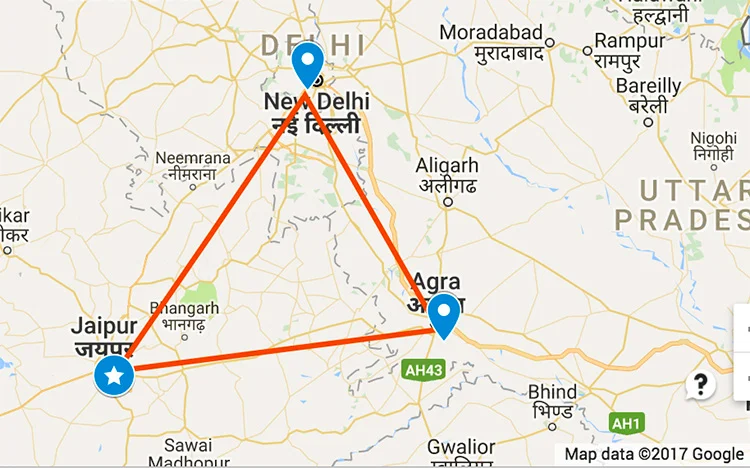
The Golden Triangle Tour Packages from Delhi is one of the most sought-after travel experiences in India, connecting three of the country's most historically significant and culturally vibrant cities — Delhi, Agra, and Jaipur. This iconic triangular route, starting and ending in Delhi, offers travelers a perfect blend of Mughal grandeur, Rajput heritage, royal palaces, bustling bazaars, and timeless architectural masterpieces that have defined India's identity for centuries.
Starting from the heart of India's capital, this tour takes you through the lanes of Old Delhi where history breathes through every wall, to the banks of the Yamuna River where the eternal Taj Mahal stands in silent magnificence, and finally to the Pink City of Jaipur where royal palaces and vibrant markets paint a picture of living Rajasthani culture. The Golden Triangle Tour from Delhi is not just a journey through cities — it is a journey through centuries.
This tour is ideal for first-time visitors to India, couples, families, and history enthusiasts who want to experience the soul of India in one seamless itinerary.
Travocation offers fully customizable Golden Triangle Tour Packages From Delhi with private AC vehicles, expert multilingual guides, flexible hotel options from budget to 5-star, and 100% personalized itineraries. Whether you are traveling solo, as a couple, or with your family, this tour guarantees an unforgettable Indian adventure.
was $50.00
save upto 20 %
Get Quotation


 Book on Tripadvisor
 Book on GetYourGuide
About This Tour

Free cancellation
Cancel up to 24 hours in advance for a full refund

Reserve now & pay on arrival
Keep your travel plans flexible — book your spot and pay nothing today.

Covid-19 precautions
Special health and safety measures are in place. Check your activity voucher once you book for full details.

Duration 05 Days
Check availability to see starting times.

Skip the line through a separate entrance

Live tour guide
English, Spanish, Japanese, French, Russian, German, & More

Pickup included
Pick up from Delhi airport, your hotel in Delhi Or Gurgaon

Private Tour
Highlights
- Explore the historic landmarks of Delhi — Jama Masjid, Humayun's Tomb, India Gate & Qutub Minar
- Witness the breathtaking Taj Mahal at sunrise — a UNESCO World Heritage Site and symbol of eternal love
- Visit the magnificent Agra Fort and the delicate Baby Taj (Itmad-ud-Daulah)
- Experience the royal grandeur of Jaipur's Amber Fort, Hawa Mahal & City Palace
- Explore the ghost city of Fatehpur Sikri — a forgotten Mughal capital frozen in time
- Shop at the vibrant bazaars of Jaipur for gems, textiles & handicrafts
- Travel in comfort with private AC vehicles and expert professional guides
- 100% customizable itinerary — perfect for couples, families & solo travelers
What’s Included
- Private AC Vehicle — Comfortable SUV or Sedan for all transfers and sightseeing
- Expert Multilingual Guides — Available in English, Spanish, French, German, Japanese, Russian & more
- 100% Customizable Itinerary — Tailored to your pace, interests, and budget
- Flexible Hotel Options — From 3-star comfort to 5-star luxury, as per your preference
- Best Price Guaranteed — No hidden charges, transparent pricing
- Reserve Now, Pay on Arrival — Keep your travel plans flexible
- Free Cancellation — Cancel up to 24 hours in advance for a full refund
- 24/7 Customer Support — We are always available to assist you
- Tip to Tour Guide & Chauffeur
- Lunch and Dinner at restaurant or at hotel
Detailed Itinerary
Expand allCollapse allDelhi — The City of Emperors
Delhi, the capital city of India, is where your Golden Triangle Tour from Delhi begins. A city that has witnessed the rise and fall of numerous empires, Delhi is a magnificent tapestry of ancient monuments, colonial architecture, and modern energy. From the narrow lanes of Old Delhi filled with the aroma of street food and spices, to the wide boulevards of New Delhi lined with colonial-era buildings — this city is a world unto itself.
Jama Masjid: One of the most iconic landmarks of Old Delhi, this grand mosque was built in the 17th century by the 5th Mughal Emperor Shah Jahan when the Mughal capital shifted from Agra to Delhi. With a capacity to hold 25,000 worshippers at one time, it is a stunning example of Indo-Islamic architecture and a must-visit on any Delhi tour.
Chandni Chowk & Spice Market: Tucked in the heart of Old Delhi, the Chandni Chowk Spice Market is believed to be one of the oldest and largest spice markets in Asia. A rickshaw ride through these buzzing, narrow lanes is an experience that engages all five senses — a true immersion into the soul of old Delhi.
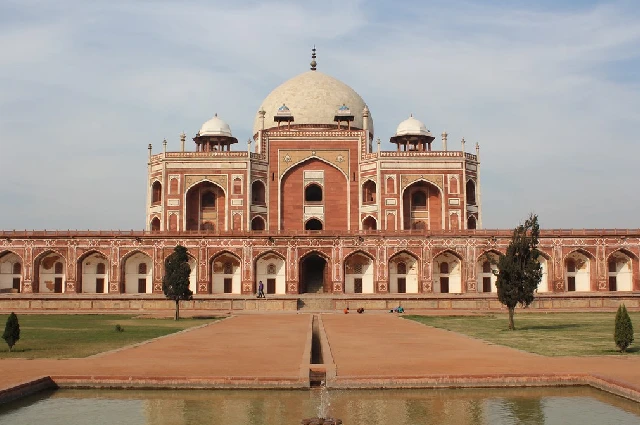
Humayun's Tomb: Believed to be the first garden mausoleum in India, Humayun's Tomb is the final resting place of the 2nd Mughal Emperor Humayun. Built in the 16th century by his widow Haji Bano Begam, it is a masterpiece of Indo-Islamic architecture set within a grand Persian-style charbagh garden with water channels and fountains. Often called the 'Dormitory of Mughals,' the complex houses approximately 150 tombs of Mughal family members.
India Gate: A powerful symbol of India, this war memorial was built to honour the 13,000 soldiers who sacrificed their lives in the First World War. Standing 52 metres tall and crafted in sandstone, India Gate is one of Delhi's most recognizable landmarks and a popular gathering point at dusk.
Qutub Minar: Standing tall at 73 metres, the Qutub Minar is a UNESCO World Heritage Site and one of Delhi's most visited monuments. Built by Qutub-ud-din Aibak in the early 13th century and later expanded by his successors, this towering minaret is adorned with intricate Arabic inscriptions and carved details. The surrounding Quwwat-ul-Islam Mosque and the famous Iron Pillar add to the historical significance of this complex.
Raj Ghat: A place of deep reverence, Raj Ghat is the cremation site of Mahatma Gandhi — the Father of the Nation. A visit here is a quiet, meaningful moment amidst the busy Delhi itinerary, offering a chance to reflect on India's journey to independence.
Agra — The City of the Taj Mahal
Agra, the second stop on the Golden Triangle Tour from Delhi, is a city synonymous with the Taj Mahal — one of the Seven Wonders of the World and an enduring symbol of love. But Agra is far more than just the Taj. The city served as the Mughal capital for over a century and is home to some of the finest Mughal-era architecture on the planet.
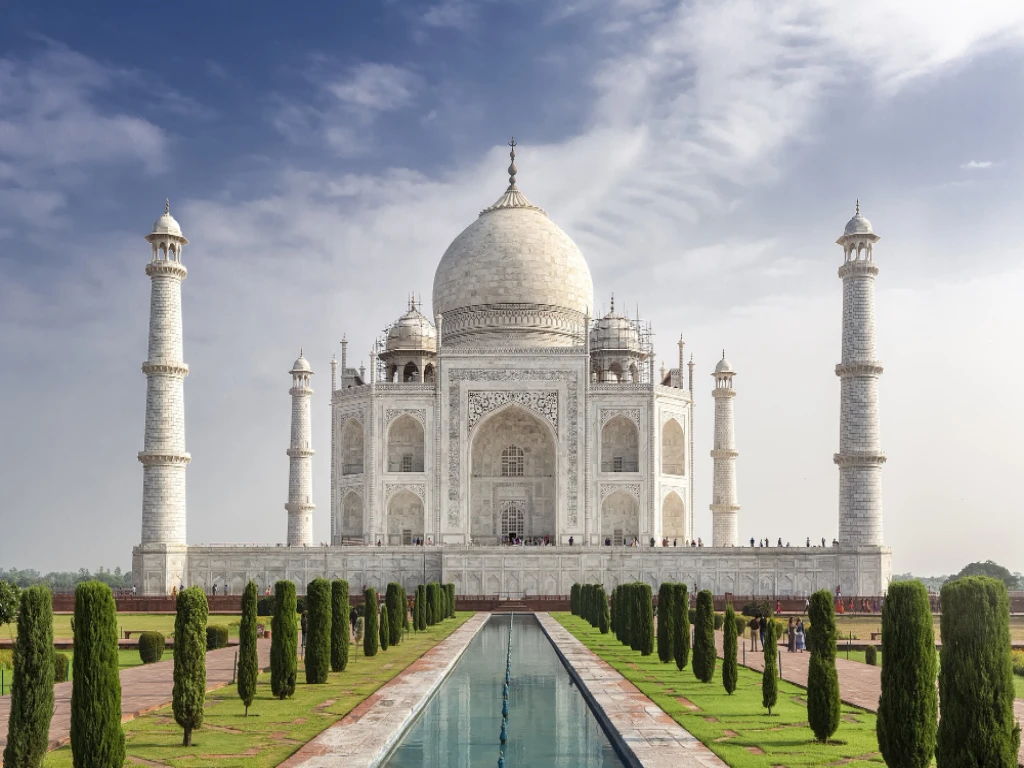
Taj Mahal at Sunrise: There is no better way to witness the Taj Mahal than at the break of dawn when the marble glows in soft golden light and the monument is reflected perfectly in the long pool before it. Built in the 17th century by Emperor Shah Jahan in memory of his beloved wife Mumtaz Mahal, this marble mausoleum took 22 years and over 20,000 artisans to complete. It is a UNESCO World Heritage Site and a once-in-a-lifetime experience that no words can fully describe.
Agra Fort: The majestic Agra Fort, also known as the Red Fort of Agra, was built by Mughal Emperor Akbar in the 16th century and served as the primary residence of the Mughal emperors until the capital moved to Delhi. With its massive red sandstone ramparts, grand palaces, halls of audience, and beautiful gardens, this UNESCO World Heritage Site is a monument of extraordinary scale and detail.
Itmad-ud-Daulah (Baby Taj): Often referred to as the "Baby Taj," the Itmad-ud-Daulah's Tomb is one of Agra's hidden gems. Built in the 17th century by Empress Nur Jahan for her father, it is the first Mughal structure to be entirely faced with white marble and intricate pietra dura inlay work — making it the forerunner of the Taj Mahal's decorative style.
Mehtab Bagh (Moonlight Garden): Located directly across the Yamuna River from the Taj Mahal, the Mehtab Bagh offers one of the most spectacular sunset views of the Taj — a sight that has to be seen to be believed. This historic Mughal garden, designed as a charbagh, is one of Agra's most peaceful and photogenic spots.
Fatehpur Sikri — The Ghost City of the Mughals
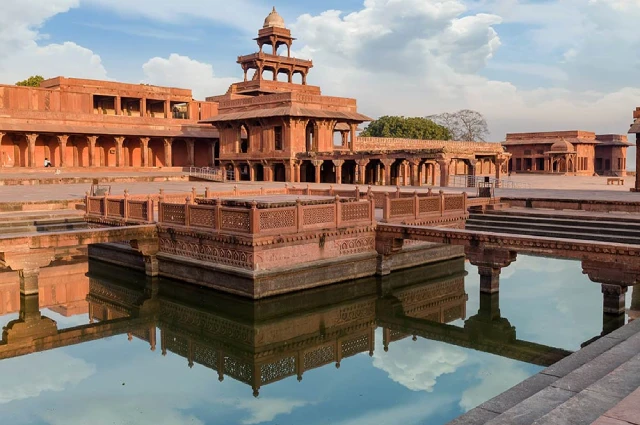
En route from Agra to Jaipur, the Golden Triangle Tour from Delhi passes through Fatehpur Sikri — one of India's most hauntingly beautiful UNESCO World Heritage Sites. Built by Emperor Akbar in the late 16th century as his new capital, this magnificent city was constructed entirely of red sandstone and served as the Mughal seat of power from 1571 to 1585 before being mysteriously abandoned.
Fatehpur Sikri is often called the 'Ghost Town of the Mughals' — a perfectly preserved city where time stands still. The site beautifully blends Hindu and Islamic architectural styles, reflecting Emperor Akbar's famous policy of religious tolerance and his vision of a unified India. Walking through its grand gateways, mosques, and palace complexes is like stepping directly into the Mughal era.
Jaipur — The Pink City of Rajasthan
The third and final destination of the Golden Triangle Tour Packages from Delhi is Jaipur — the royal capital of Rajasthan and one of India's most vibrant and colourful cities. Known as the Pink City due to its distinctive terracotta-pink buildings, Jaipur was founded in 1727 by Maharaja Sawai Jai Singh II and remains a living testament to Rajput grandeur, artistic brilliance, and regal hospitality.
Amber Fort: Perched majestically on a hilltop overlooking Maota Lake on the outskirts of Jaipur, Amber Fort is one of India's most stunning royal fortifications. Built in the 16th century, it showcases a breathtaking fusion of Rajput and Mughal architectural styles with ornate mirrored halls, intricate carvings, and sweeping panoramic views of the surrounding Aravalli Hills.
Hawa Mahal (Palace of Winds): Perhaps the most photographed landmark in Jaipur, the Hawa Mahal is a five-storey palace facade featuring 953 intricately latticed windows. Built in 1799 by Maharaja Sawai Pratap Singh, it was designed to allow the royal ladies of the court to observe street festivities while remaining unseen — a masterpiece of functional architecture.
City Palace: One of the grandest royal complexes in India, the City Palace in Jaipur is a sprawling ensemble of palaces, courtyards, museums, and gardens that reflects the opulent lifestyle of the Rajput rulers. The palace showcases a seamless fusion of Rajput, Mughal, and European architectural styles and is still partly occupied by the royal family of Jaipur.
Jantar Mantar (The Royal Observatory): A UNESCO World Heritage Site, Jantar Mantar is an 18th-century astronomical observatory built by Maharaja Sawai Jai Singh II. Housing some of the world's largest stone astronomical instruments, it remains a testament to India's advanced scientific achievements in the pre-modern era.
Jal Mahal (Water Palace): Rising elegantly from the centre of Man Sagar Lake, the Jal Mahal is one of Jaipur's most iconic and magical sights. Built in the 18th century in Rajput style, this palace appears to float serenely on the lake's surface — particularly enchanting at dusk when the surrounding hills are reflected in the still water.
Panna Meena Kund (Step Well): A hidden gem near Amber Fort, this 16th-century step well is one of Jaipur's most visually striking heritage structures. Its geometrically patterned steps descending symmetrically to the water level make it a favourite spot for architecture lovers and photographers alike.
Birla Temple (Laxmi Narayan Temple): Built in 1988 by the Birla family and dedicated to Lord Vishnu and Goddess Lakshmi, this stunning white marble temple is a serene sanctuary amidst the bustling Pink City. The evening aarti ceremony here is a deeply spiritual and moving experience that visitors always remember.

We are Here To Serve You ?
Book With Confidence
- No-hassle best price guarantee
- Customer care available 24/7
- Hand-picked Tours & Activities
- Free Travel Insurance


Detailed Itinerary
Expand allCollapse allDelhi — The City of Emperors
Delhi, the capital city of India, is where your Golden Triangle Tour from Delhi begins. A city that has witnessed the rise and fall of numerous empires, Delhi is a magnificent tapestry of ancient monuments, colonial architecture, and modern energy. From the narrow lanes of Old Delhi filled with the aroma of street food and spices, to the wide boulevards of New Delhi lined with colonial-era buildings — this city is a world unto itself.
Jama Masjid: One of the most iconic landmarks of Old Delhi, this grand mosque was built in the 17th century by the 5th Mughal Emperor Shah Jahan when the Mughal capital shifted from Agra to Delhi. With a capacity to hold 25,000 worshippers at one time, it is a stunning example of Indo-Islamic architecture and a must-visit on any Delhi tour.
Chandni Chowk & Spice Market: Tucked in the heart of Old Delhi, the Chandni Chowk Spice Market is believed to be one of the oldest and largest spice markets in Asia. A rickshaw ride through these buzzing, narrow lanes is an experience that engages all five senses — a true immersion into the soul of old Delhi.
Humayun's Tomb: Believed to be the first garden mausoleum in India, Humayun's Tomb is the final resting place of the 2nd Mughal Emperor Humayun. Built in the 16th century by his widow Haji Bano Begam, it is a masterpiece of Indo-Islamic architecture set within a grand Persian-style charbagh garden with water channels and fountains. Often called the 'Dormitory of Mughals,' the complex houses approximately 150 tombs of Mughal family members.
India Gate: A powerful symbol of India, this war memorial was built to honour the 13,000 soldiers who sacrificed their lives in the First World War. Standing 52 metres tall and crafted in sandstone, India Gate is one of Delhi's most recognizable landmarks and a popular gathering point at dusk.
Qutub Minar: Standing tall at 73 metres, the Qutub Minar is a UNESCO World Heritage Site and one of Delhi's most visited monuments. Built by Qutub-ud-din Aibak in the early 13th century and later expanded by his successors, this towering minaret is adorned with intricate Arabic inscriptions and carved details. The surrounding Quwwat-ul-Islam Mosque and the famous Iron Pillar add to the historical significance of this complex.
Raj Ghat: A place of deep reverence, Raj Ghat is the cremation site of Mahatma Gandhi — the Father of the Nation. A visit here is a quiet, meaningful moment amidst the busy Delhi itinerary, offering a chance to reflect on India's journey to independence.
Agra — The City of the Taj Mahal
Agra, the second stop on the Golden Triangle Tour from Delhi, is a city synonymous with the Taj Mahal — one of the Seven Wonders of the World and an enduring symbol of love. But Agra is far more than just the Taj. The city served as the Mughal capital for over a century and is home to some of the finest Mughal-era architecture on the planet.
Taj Mahal at Sunrise: There is no better way to witness the Taj Mahal than at the break of dawn when the marble glows in soft golden light and the monument is reflected perfectly in the long pool before it. Built in the 17th century by Emperor Shah Jahan in memory of his beloved wife Mumtaz Mahal, this marble mausoleum took 22 years and over 20,000 artisans to complete. It is a UNESCO World Heritage Site and a once-in-a-lifetime experience that no words can fully describe.
Agra Fort: The majestic Agra Fort, also known as the Red Fort of Agra, was built by Mughal Emperor Akbar in the 16th century and served as the primary residence of the Mughal emperors until the capital moved to Delhi. With its massive red sandstone ramparts, grand palaces, halls of audience, and beautiful gardens, this UNESCO World Heritage Site is a monument of extraordinary scale and detail.
Itmad-ud-Daulah (Baby Taj): Often referred to as the "Baby Taj," the Itmad-ud-Daulah's Tomb is one of Agra's hidden gems. Built in the 17th century by Empress Nur Jahan for her father, it is the first Mughal structure to be entirely faced with white marble and intricate pietra dura inlay work — making it the forerunner of the Taj Mahal's decorative style.
Mehtab Bagh (Moonlight Garden): Located directly across the Yamuna River from the Taj Mahal, the Mehtab Bagh offers one of the most spectacular sunset views of the Taj — a sight that has to be seen to be believed. This historic Mughal garden, designed as a charbagh, is one of Agra's most peaceful and photogenic spots.
Fatehpur Sikri — The Ghost City of the Mughals
En route from Agra to Jaipur, the Golden Triangle Tour from Delhi passes through Fatehpur Sikri — one of India's most hauntingly beautiful UNESCO World Heritage Sites. Built by Emperor Akbar in the late 16th century as his new capital, this magnificent city was constructed entirely of red sandstone and served as the Mughal seat of power from 1571 to 1585 before being mysteriously abandoned.
Fatehpur Sikri is often called the 'Ghost Town of the Mughals' — a perfectly preserved city where time stands still. The site beautifully blends Hindu and Islamic architectural styles, reflecting Emperor Akbar's famous policy of religious tolerance and his vision of a unified India. Walking through its grand gateways, mosques, and palace complexes is like stepping directly into the Mughal era.
Jaipur — The Pink City of Rajasthan
The third and final destination of the Golden Triangle Tour Packages from Delhi is Jaipur — the royal capital of Rajasthan and one of India's most vibrant and colourful cities. Known as the Pink City due to its distinctive terracotta-pink buildings, Jaipur was founded in 1727 by Maharaja Sawai Jai Singh II and remains a living testament to Rajput grandeur, artistic brilliance, and regal hospitality.
Amber Fort: Perched majestically on a hilltop overlooking Maota Lake on the outskirts of Jaipur, Amber Fort is one of India's most stunning royal fortifications. Built in the 16th century, it showcases a breathtaking fusion of Rajput and Mughal architectural styles with ornate mirrored halls, intricate carvings, and sweeping panoramic views of the surrounding Aravalli Hills.
Hawa Mahal (Palace of Winds): Perhaps the most photographed landmark in Jaipur, the Hawa Mahal is a five-storey palace facade featuring 953 intricately latticed windows. Built in 1799 by Maharaja Sawai Pratap Singh, it was designed to allow the royal ladies of the court to observe street festivities while remaining unseen — a masterpiece of functional architecture.
City Palace: One of the grandest royal complexes in India, the City Palace in Jaipur is a sprawling ensemble of palaces, courtyards, museums, and gardens that reflects the opulent lifestyle of the Rajput rulers. The palace showcases a seamless fusion of Rajput, Mughal, and European architectural styles and is still partly occupied by the royal family of Jaipur.
Jantar Mantar (The Royal Observatory): A UNESCO World Heritage Site, Jantar Mantar is an 18th-century astronomical observatory built by Maharaja Sawai Jai Singh II. Housing some of the world's largest stone astronomical instruments, it remains a testament to India's advanced scientific achievements in the pre-modern era.
Jal Mahal (Water Palace): Rising elegantly from the centre of Man Sagar Lake, the Jal Mahal is one of Jaipur's most iconic and magical sights. Built in the 18th century in Rajput style, this palace appears to float serenely on the lake's surface — particularly enchanting at dusk when the surrounding hills are reflected in the still water.
Panna Meena Kund (Step Well): A hidden gem near Amber Fort, this 16th-century step well is one of Jaipur's most visually striking heritage structures. Its geometrically patterned steps descending symmetrically to the water level make it a favourite spot for architecture lovers and photographers alike.
Birla Temple (Laxmi Narayan Temple): Built in 1988 by the Birla family and dedicated to Lord Vishnu and Goddess Lakshmi, this stunning white marble temple is a serene sanctuary amidst the bustling Pink City. The evening aarti ceremony here is a deeply spiritual and moving experience that visitors always remember.
Vehicle we use

Sedan 1-2 Peoples

Suv 3-5 Peoples

Mini Coach 6-12 Peoples
FAQ's
What is the Cancellation Policy?
Does Train ride includes Economy Coach or Executive Coach?
Can i book this tour in advance?
What are the Payment methods?
What is the Pick-Up Location and Drop-Off Location?
real travelers reviews
 Posted on Tripadvisor
 Silvia
 Respectful friendly and fun!! Shaan, Great tour guide in Delhi, Jaipur and Agra. We visit the most emblematic places and other more secret corners. Hello India Tour highly recommended and very entertaining.Posted on Tripadvisor
 German CQuality right price!! I came with quite a lot of expectations regarding India, some fears, traveling with my wife on vacation and I think the best decision was to have hired a local guide and good choice we had when meeting Shaan, I think hello Indian tour is a good choice if you want to have a good experience and care.Posted on Tripadvisor
 Blanca Leticia Gastelum GalindoMy days EN India Hello my name ES Blanca, I am DE Mexico and it was an excellent experience with Hello India tours with my guide Shaan , I highly recommend it, we went to DE Delhi city, Agra where the Taj Mahal is, Jaipur, Jodhpur, Pushkar .. excel EN te service .. ask my star guide in Spanish 100% Shaan ..🌹😀Posted on Tripadvisor
 MARIA MPerfect Trip I had an amazing experience with Travocation Group! From the very beginning, their team was professional, responsive, and truly cared about making my trip smooth and memorable. ✨ Whether you’re traveling solo, as a couple, or with a group, I highly recommend Travocation Group for a stress-free and unforgettable journey. Looking forward to planning my next adventure with them!✠Trusted Company✠Great Customer Service✠Value for MoneyThank you, Travocation Group! 🙌Posted on Tripadvisor
 Itsasne CExperience DE 10! The tour has been fantastic. Spectacular places and views, the guide and the driver very attentive with us. 100% recommended.Posted on Tripadvisor
 Ane GAmazing! The tour was amazing. They adapted a bit to what we wanted and it's been great!Both the driver and the guide have been super nice and made us feel great.The guide spoke Spanish perfectly and explained things very well.Posted on Tripadvisor
 pablo VDE Dream Trip and 5-Star Tour Happiness POR the path accompanied EN my aventura in India. I knew many places, I EN you accompanied and protected at all times. DE highlight the guide of Raza who went to find me and leave all the destinations. And DElight the Spanish-speaking guide Musharraf POR his work and history EN station in the different monuments toured. I'll come back more often and with more people. Thank you and congratulations.Posted on Tripadvisor
 Javi GGrateful to the willingness of the guide and driver. Overall rating of 10. Programme adjusted to the time available. Right.Perhaps as a suggestion and given the little offer of activities in Agra I would have proposed reducing a night in Agra and adding it to Jaipur or Delhi.Posted on Tripadvisor
 gemma oA unique experience From arrival at the airport to the end of the trip we have had a magnificent experience. Both the guide and the driver were watching us at all times. They were polite, punctual, helped us choose meals (since we don’t like spicy). Amid, the guide, explained all the monuments and had the patience to take pictures. Overall it was great. We are looking forward to coming back to see other places in India.Posted on Tripadvisor
 Carlos BVwry good experience Great guide with very good level of Spanish. He took us to visit the Taj Mahal with brief but important explanations. We also visited the small Taj Mahal - It Madud - Daula, among other places and at night we visited the sadar bazaar. Highly recommended
